
Wooden Toys vs Plastic Toys: Which Is Better for the Planet?
Choose toys that last longer and leave less behind—make playtime better for the planet with smarter, more sustainable choices.
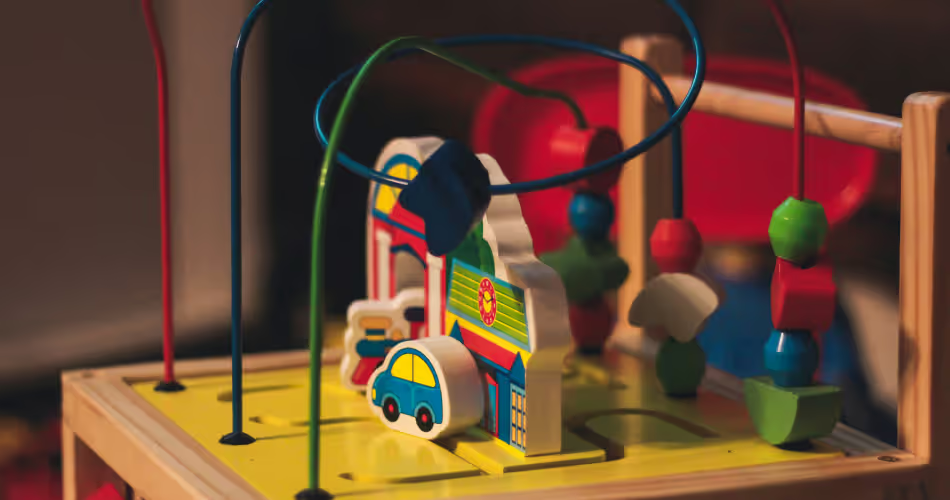
As soon as you enter a toy store, you will see bright, colorful plastic toys everywhere and, in comparison, the quiet wooden toys that have been there a long time. Some might say this is just a choice between design and memory, but when you actually consider the question, the topic gets a little deeper—what is actually better for the environment?
There are good reasons why plastic toys are widely available. In fact, plastic can be molded into almost anything, is inexpensive to produce, and can be manufactured in massive quantities with minimal effort. From action figures to talking action robots, plastic offers endless creative possibilities. The downside is that most plastic toys are made from petroleum products, so, from the get-go, they require fossil fuels. Then, when you factor in manufacturing emissions and the number of times many toys break or become obsolete, you will also have a lot of waste.
Once playtime is over, it becomes more difficult to recycle plastic toys than it is to recycle wooden toys. Plastic toys with electronic components (batteries or other electronics) and a mixture of materials (plastic and card) cannot be recycled. Most plastic toys that were once played with end up in landfills for hundreds of years, turning into microplastics in the oceans and soils and continuing to pollute the environment.
Wooden toys take an entirely different direction when they are constructed. Construction materials are almost always derived from natural sources on Earth, and when sustainable sources are used, wood is a renewable resource. This allows for the creation of renewable natural products through the harvesting and regrowth of trees. In addition, most wooden toys are designed to be durable. A wooden toy's lifespan can typically exceed several decades and be passed from one generation to the next, rather than breaking down in just a few months of play. Because of the long time between toy replacements, wooden toy lifespans help reduce waste.
Another factor to consider is how the toys are produced. Compared to plastic toys, relatively few hazardous chemicals are used to manufacture wooden toys, even though they still require some energy. Many wooden toys are either unpainted or painted with non-toxic paint, thereby minimizing environmental impact and making them safer for children to use. Finally, when wooden toys reach the end of their useful life, they can break down. Wood will decompose, and there will be no toxic byproducts, unlike plastic, which will take hundreds of years to decompose and remain in the environment.
The forest timber supply chain for forest toy production has not received sufficient consideration; however, there will be a positive benefit to spending additional resources on locating high-quality timber for making these wooden toys using sound production techniques. Because there is significant variability in how wooden toys (or any wooden product) are produced, deforestation remains an urgent and ongoing global issue.
The timber used in making wooden products influences the overall sustainability of the finished product significantly from both a sourcing and production standpoint. In contrast, when sourcing plastic toys, some are made from materials that may be environmentally detrimental, while others are made from materials that can provide ecological benefits. For example, comparing two plastic toys—one is a low-quality, single-use, disposable commodity, and the other is a high-quality plastic toy that was purchased and retained by the original purchaser for an extended period, repaired frequently, and/or given to a child as a gift—the second plastic toy uses more material (i.e., plastic resin) than the first; therefore, it will likely have less environmental impact.
In summary, examining the big picture shows that wooden toys typically outweigh plastic options. They are renewable by nature when harvested properly, have longer lifespans than most plastic options, and break down naturally.