Why Sensory Toys Are So Popular Right Now
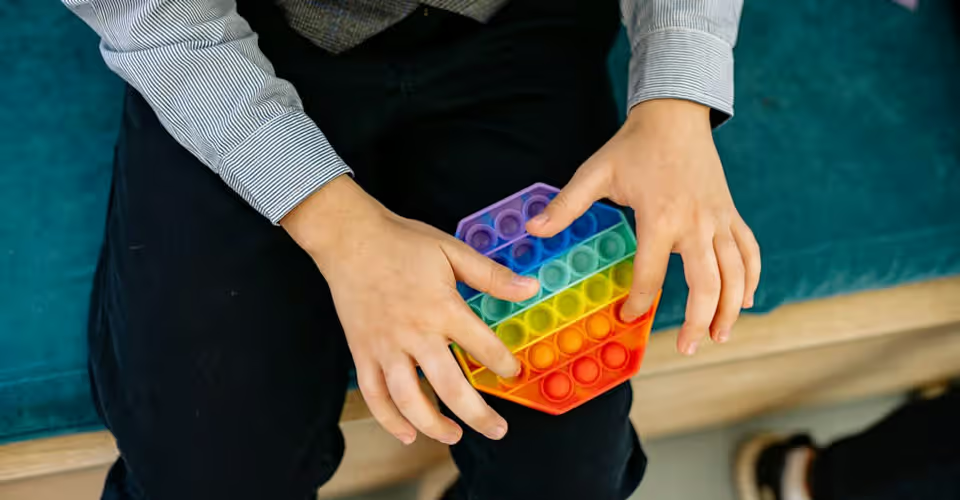
Sensory toys are popular right now because people are overwhelmed. That is the cleanest answer. Kids are overwhelmed. Parents are overwhelmed. Teachers are overwhelmed. Honestly, half the adults buying squishy things, poppable things, stretchy things, and clicky little gadgets are not doing it just for children. They are doing it because modern life has somehow turned everybody’s nervous system into a browser with forty tabs open and one of them is playing mysterious background music.
So when a small object can calm the hands, settle the brain a bit, or simply give someone something physical to do with restless energy, people notice. Fast. That is where the boom comes from.
They give the body something the brain desperately needs
A lot of stress does not live neatly in words. It lives in shoulders, jaws, fingers, pacing, fidgeting, chewing pens, bouncing knees, and that general feeling of being slightly too full of static. Sensory play helps because they turn that floating discomfort into action. Press this. Stretch that. Twist this. Squeeze that. Simple. Repetitive. Weirdly effective.
That kind of input can be grounding. Not magical. Just grounding. It gives the body a small job, and sometimes that is enough to take the edge off. People love tools that do not ask for a speech, a breakthrough, or a personal transformation. A sensory toy just says, here, use your hands for a second. That is a very appealing offer.
The world has become louder and more stimulating
This part matters. Sensory toys are rising at the same time life is getting more intense in quiet little ways. More screens. More notifications. More noise. More transitions. More background stress. Even fun now can be overstimulating.
Because of that, people are paying more attention to regulation. Not in a super clinical, textbook sort of way. More in a practical, everyday way. They are noticing that when kids focus better on something in their hands. They notice that certain textures calm them down. They are noticing that adults fidget too, just with worse objects, usually pens that they do not own.
They are playful without being pointless
That is another big reason they work. Sensory toys do not feel like medicine. They feel like fun. That matters more than people think. A lot of helpful tools fail because they feel boring, embarrassing, or overly serious. Sensory toys usually avoid that trap. They are colorful. Tactile. Satisfying. Sometimes cute. Sometimes oddly stylish. A pop toy or squish toy can help someone regulate without making them feel like they have been assigned homework by a wellness brand.
They work across ages in a way most trends do not
Most toy crazes belong to one age group. Sensory toys do not. A toddler can love them. A school-age child can use them to focus. A teenager can keep one in a bag without much fuss. An adult can leave one on a desk and pretend it is there for “concentration,” which is often true. That wide appeal keeps the trend alive. It is not confined to a single narrow market. It moves through classrooms, offices, homes, therapy spaces, waiting rooms, cars, and backpacks. It becomes normal. Once something becomes normal, it gets bigger.
They offer small control in a chaotic moment
This may be the biggest reason of all. Sensory toys are popular because they offer a tiny pocket of control. The texture stays the same. The motion stays the same. The response is predictable. Squeeze it, it gives. Pop it, it pops. Spin it, it spins. That reliability feels good.