Why Are Collectible Toys Regarded as Serious Investments
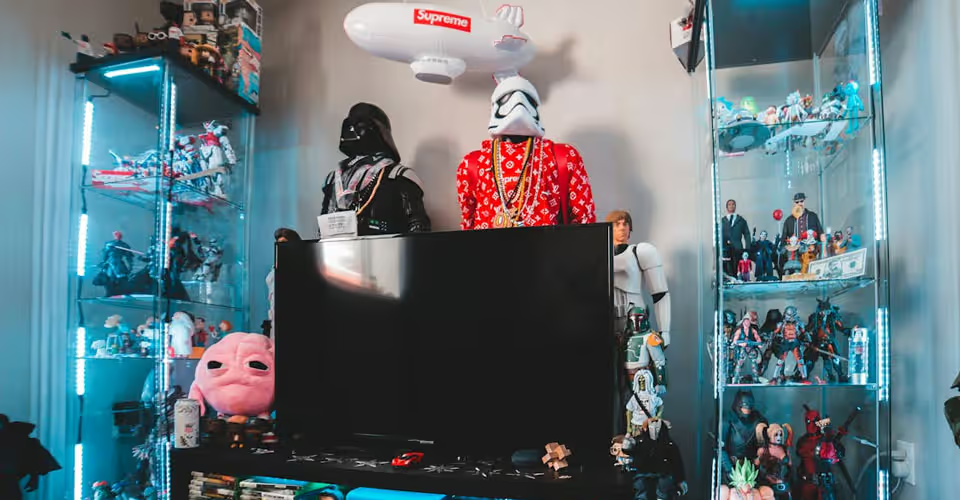
The word toy makes people think of plastic clutter, lost accessories, and something getting stepped on in the dark. But collectible toys live in a completely different universe. They are treated less like playthings and more like tiny cultural artifacts with price tags that can get weirdly serious, weirdly fast.
That shift happened because people do not only buy collectible toys for fun anymore. They buy them for rarity, nostalgia, status, and resale potential. Once those four things show up together, the whole conversation changes. Suddenly, the figure on the shelf is not just cute. It is “an asset,” which is a very dramatic word for something with painted eyebrows, but here we are.
Scarcity does most of the heavy lifting
The biggest reason collectible toys get treated like investments is simple. There are not enough of the desirable ones to go around. Limited runs matter. Convention exclusives matter. Region-specific releases matter. Older items that survived in mint condition matter even more. Once supply stays low and demand stays high, prices start climbing, and collectors begin treating the whole thing more seriously than outsiders expect.
That is how a toy crosses the line from hobby object to investment piece. It becomes hard to replace. And once collectors realize something is hard to replace, they get very protective, very watchful, and very interested in boxes.
Nostalgia is not a soft force, it is a money force
People love pretending nostalgia is just an emotion. It is not. It is a market engine. A huge number of collectible toy buyers are adults chasing a piece of childhood, or at least a cleaner, shinier version of it. They are not just buying an object. They are buying memory, identity, and the feeling that something from the past still matters now. That makes demand surprisingly durable.
When enough adults with disposable income all decide that the robot, action figure, doll, or designer vinyl they loved years ago is suddenly important again, prices move. Fast. That is one reason collectible toys can behave more like memorabilia than ordinary retail products. They are attached to personal history, and people spend irrationally around personal history all the time.
Condition changes everything
This part gets a little funny from the outside. The value of a collectible toy can swing wildly depending on whether it is sealed, opened, displayed, damaged, faded, missing one tiny accessory, or trapped inside packaging so pristine it looks like it has been emotionally protected for decades. Condition matters because collectors do not only want the thing. They want the best surviving version of the thing.
That creates tiers of value. Two people can technically own the same toy, but one might have a casual shelf piece while the other has something treated like a museum specimen. Once grading, authenticity, packaging, and preservation enter the picture, the market starts looking more like art collecting than toy shopping.
Communities turn objects into markets
Collectible toys become serious investments because communities keep agreeing that they are worth taking seriously. That sounds obvious, but it matters. Collectors talk. They compare releases, track prices, discuss rarity, show off finds, and create shared ideas of what counts as valuable. Resale platforms make prices visible. Social media makes hype visible. Limited drops create urgency. Suddenly, the market has memory, momentum, and a crowd watching every move.
They sit between passion and speculation
This is the real answer, honestly. Collectible toys are regarded as serious investments because they live in the sweet spot where emotion and money shake hands. People genuinely love them. That keeps demand alive. People also believe some of them will appreciate over time. That brings in a more investment-minded crowd. Once both types meet in the same space, values can rise far beyond what the original retail price ever suggested.
That said, if you're interested in breaking into the collectibles market and making a buck, you might like to check out some blind box collecting tips on our sister site that may help keep your investments reasonable and put your budget into perspective.