5 Classic Board Games That Are Trending Again
Something funny has happened in the last few years. Games that once lived in dusty cupboards, holiday cottages, and grandparents’ sideboards have started feeling cool again. Not “we are playing this because the wifi is down” cool. Properly cool. People are rediscovering that a lot of classic board and word games were never boring in the first place. They were just waiting for everyone to calm down and notice.
And honestly, fair enough. These games have survived decades for a reason. They are social, sharp, messy, dramatic, and just structured enough to stop a room from drifting into total chaos. Usually. Here are five that have held on, and in some cases, come roaring back.
Chess
Chess had one of the strangest glow-ups ever. For years, it carried this very serious aura, like you had to either be twelve moves ahead or wearing a turtleneck to enjoy it. Then The Queen’s Gambit showed up and suddenly people who had never touched a bishop in their lives were googling openings and pretending they had always found pawns thrilling.
The beauty of chess is that it keeps changing size depending on who is playing it. With beginners, it is dramatic and slightly clumsy. With strong players, it becomes this cold little war full of traps, patience, and ego. That range keeps it alive. It can be casual. It can be obsessive. It can also make you feel incredibly intelligent right before you blunder your queen for no good reason.
Backgammon
Backgammon has this quiet confidence about it. It never chases attention, but it absolutely deserves more of it. The game looks elegant. The board is lovely. The pieces click around with that satisfying little sound that makes you feel smarter than you probably are. Then you start playing and realize it is much more tactical than it first appears.
That is the trick with backgammon. It looks relaxed. It is not always relaxed. There is luck in the dice, yes, but there is also judgment, timing, and that constant little calculation of whether to play safely or start causing problems. It is quick enough to stay lively and sharp enough to keep people invested. A very strong combination.
Scrabble & Boggle
These two live in the same part of the brain. The part that likes words but also enjoys low-level panic. Scrabble is slower, meaner, and more strategic than people remember. It is not just about knowing long words. It is about placement, balance, and the deeply satisfying act of dropping something smug onto a triple word score. Boggle is faster and more frantic. It turns word-finding into a short burst of chaos where everyone suddenly becomes weirdly competitive about spotting “mint” before somebody else does.
Monopoly
Monopoly remains one of the great social experiments disguised as family entertainment. People love to complain about it, yet somehow it keeps hitting the table. Why? Because it creates stories. Bad decisions. Petty negotiations. Sudden power shifts. Tiny economic empires built on pure greed and one lucky street. It drags, yes. It absolutely drags. But that is part of the weird mythology around it. Monopoly is not just a board game anymore. It is an event. A test of patience. A personality reveal. It turns perfectly decent people into landlords with terrifying confidence. Horrible. Great.
Clue
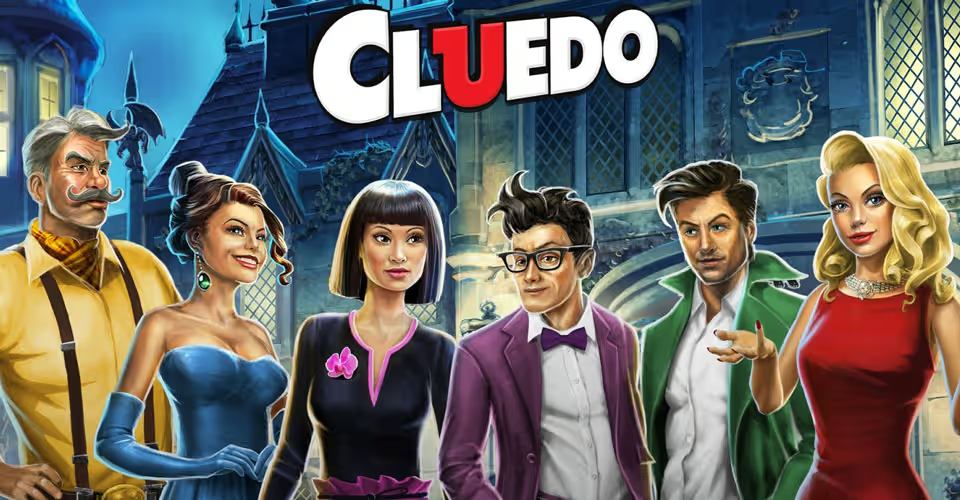
Clue, or Cluedo depending on where you are, still has one of the best setups in gaming. Murder. Mansion. Suspects. Rooms. Accusations. Lovely stuff. The reason it lasts is simple. It makes deduction feel theatrical. You are not only solving a puzzle. You are circling people, gathering scraps of information, and slowly becoming far too suspicious of Colonel Mustard. The game has atmosphere without needing much from the players besides attention and a willingness to sound dramatic when naming a weapon.